Undetected degradation
↓
Anomaly or loss of performance
↓
Failure or unplanned shutdown
↓
Corrective action
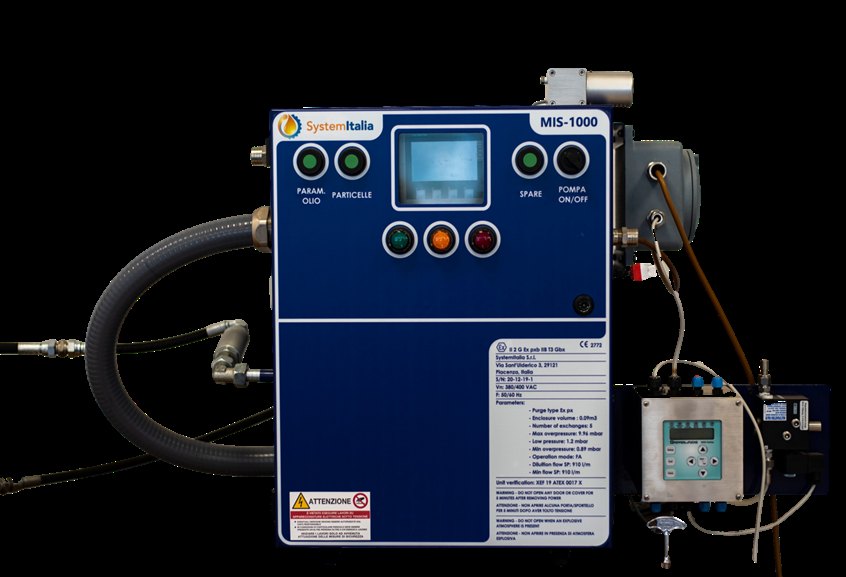
MIS monitors the health of critical machinery, identifies early signs of degradation, and supports maintenance decisions based on objective data.
Discover how it worksCritical machinery can develop wear, contamination, abnormal friction, and progressive deterioration before the problem becomes evident.
When these signals are not identified in time, maintenance becomes reactive: action is taken only after an anomaly, unplanned shutdown, or failure.
MIS is designed to anticipate this point by transforming machine data into useful information, enabling intervention before failure occurs.
Sensors, data acquisition, and operating-condition analysis are integrated into a single system to provide a continuous view of asset health.
The value lies not only in collecting data, but in transforming it into actionable information for maintenance planning and reducing the risk of unexpected failures.
Continuous acquisition of significant machine parameters.
Processing data from multiple condition-monitoring technologies.
Recognition of early signs of wear, contamination, or abnormal operation.
Interpretation of trends and the potential evolution of degradation.
Support for planning preventive and predictive maintenance activities.
MIS combines different monitoring technologies to identify phenomena that would be difficult to interpret through a single analysis method.
Monitoring lubricant parameters, contamination, and indicators of deteriorating operating conditions.
Monitoring and classifying metallic particles in oil to identify wear and deterioration at an early stage.
Monitoring bearings, gears, and rotating components to identify imbalance, defects, and mechanical anomalies.
A complementary technology to vibration analysis for early detection of anomalies and degradation in rotating components.
The presence, size, and evolution of metallic particles in oil can provide significant information about deterioration in gears, bearings, and mechanical components.
Identification of particles generated by wear mechanisms.
Organisation of particles by size class and relevant characteristics.
Evaluation over time to distinguish isolated events from progressive phenomena.
Support in selecting the most appropriate time for inspection or maintenance.
Identifies anomalies and degradation before they develop into failure.
Supports trend assessment and maintenance planning based on actual machine condition.
Reduces the risk of unexpected shutdowns and improves the availability of critical machinery.
Transforms machine data into usable technical information.
Monitoring of rotating components, lubrication, gears, bearings, and operating conditions.
Monitoring mechanical condition, lubricant health, and early signs of wear.
Combined analysis of operating conditions and the main degradation mechanisms.
Custom applications for assets where reliability and operational continuity are essential.
MIS supports preventive and predictive maintenance based on the actual condition of the machine.
Contact SystemItalia